#01
What about after ABW?
The event held with GRADO Founder Alex Chai introducing DOS — Dynamic Office Solutions.ABW (Activity-Based Working) transformed office planning by allowing people to choose their environment based on the task — instead of being tied to a fixed desk. But in reality, challenges remain: layouts often lag behind behavior, and updates require effort, cost and structural change.
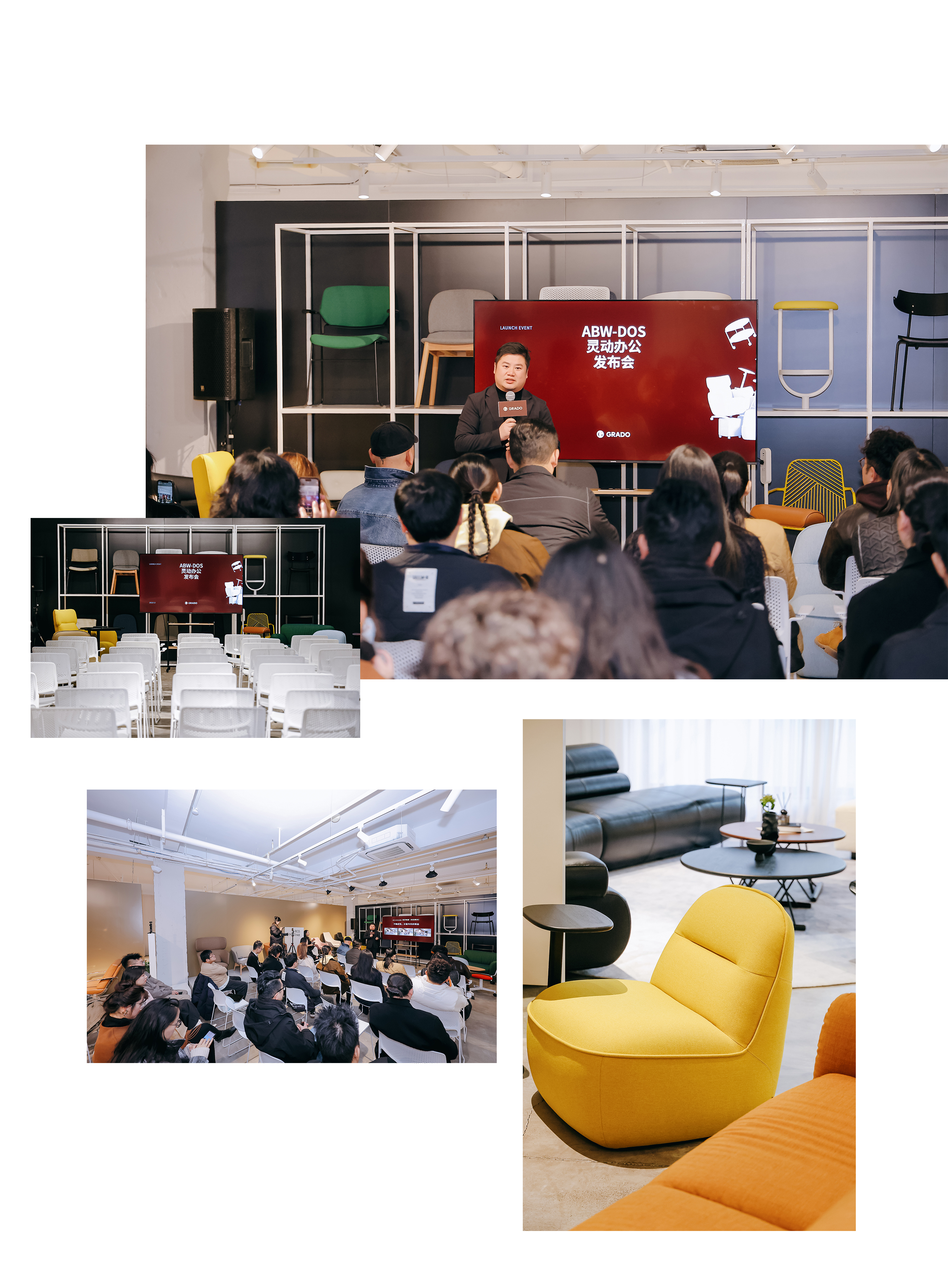
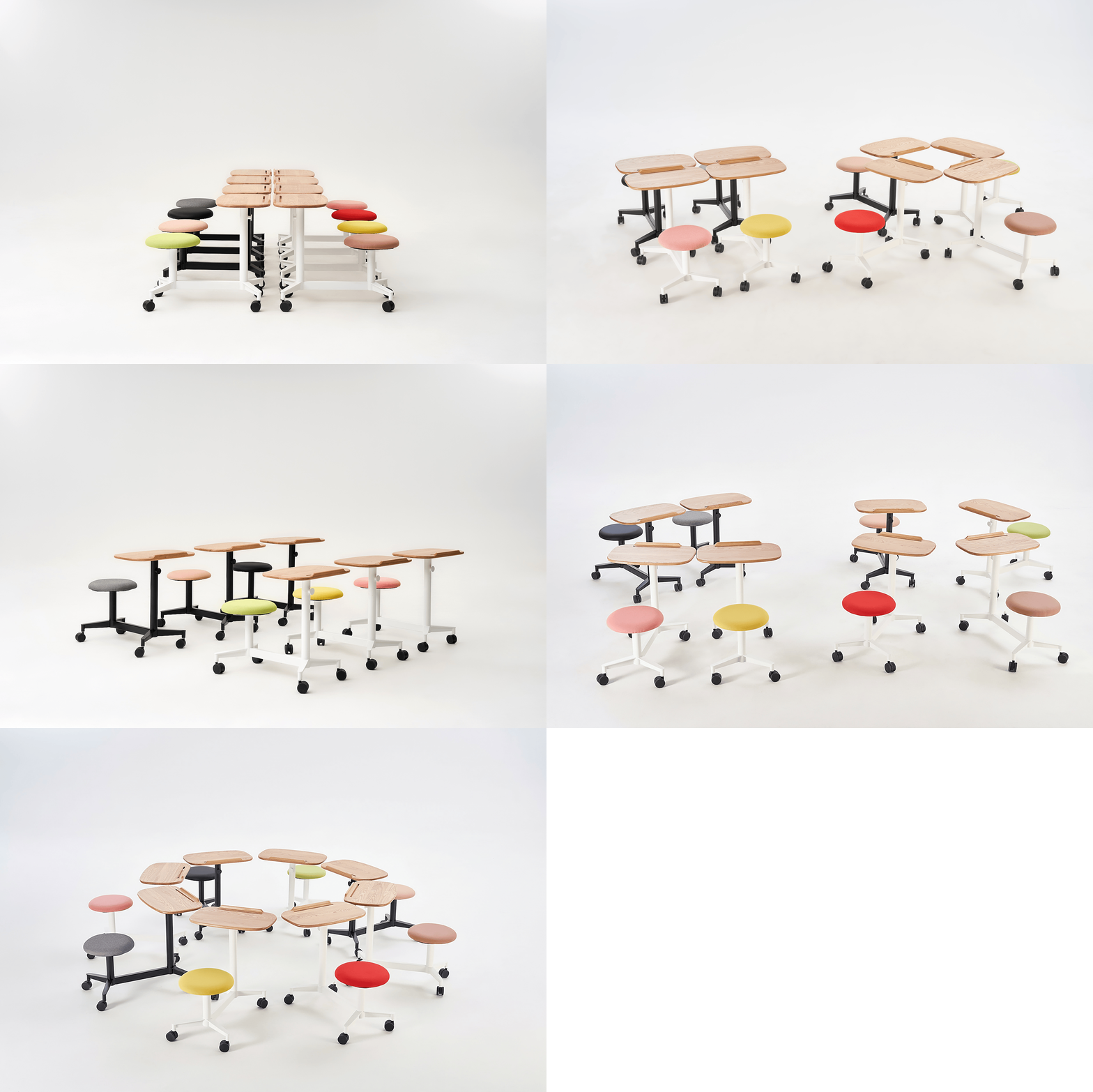
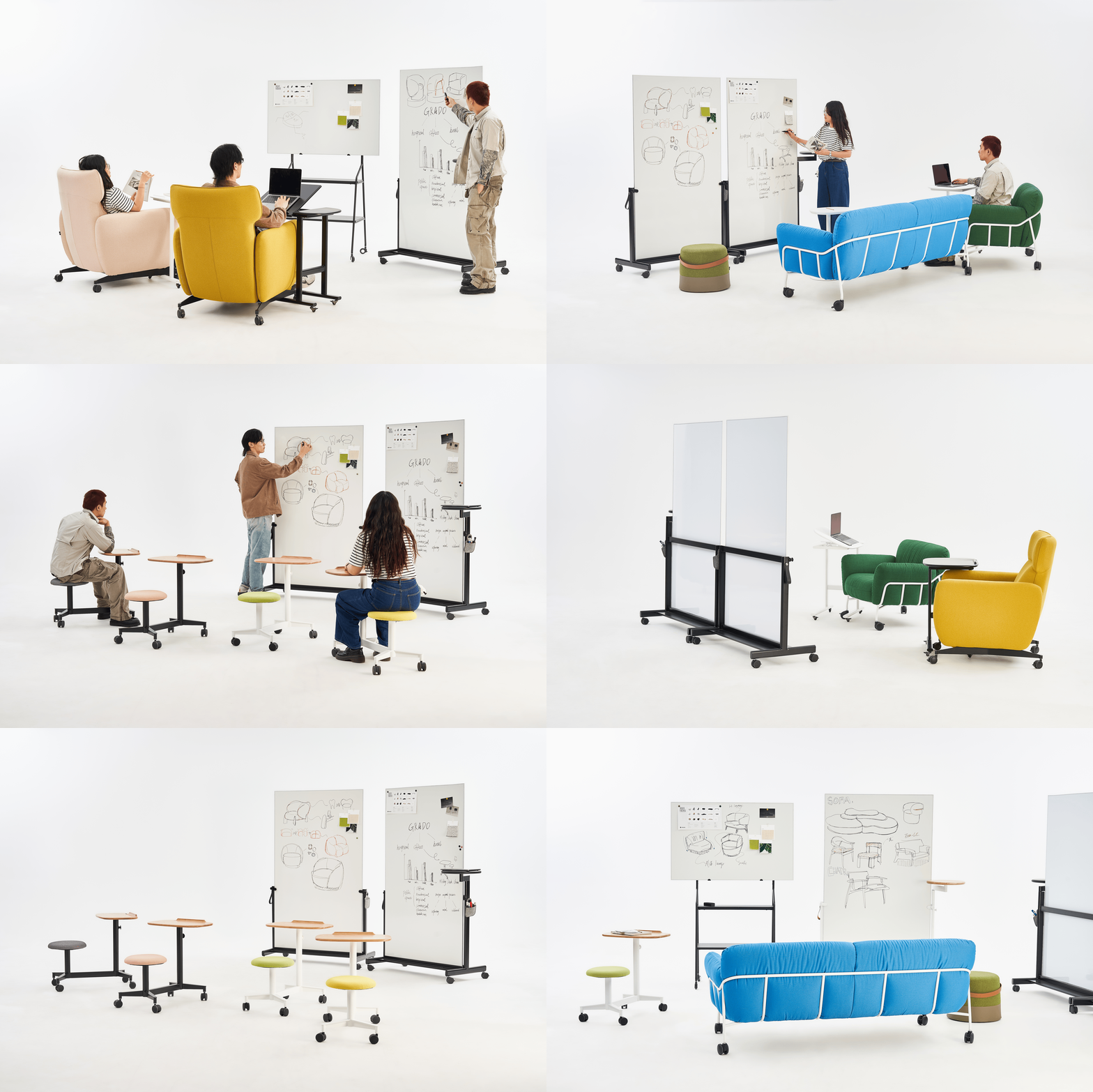
DOS builds on ABW and goes one step further.Through modular, lightweight, movable components, spaces can now evolve instantly — as quickly as work does.
During the presentation, DOS was explored across three dimensions: Time ( immediate response + long-term adaptability )、 Collaboration Distance ( supporting multiple scales of interaction )、 Economics ( maximizing reuse and lifetime value ). All three lead to one outcome: spaces that remain continuously usable, even as needs change.
(英文)ABW-DOS_20.jpg)
#02
Collaboration through Posture
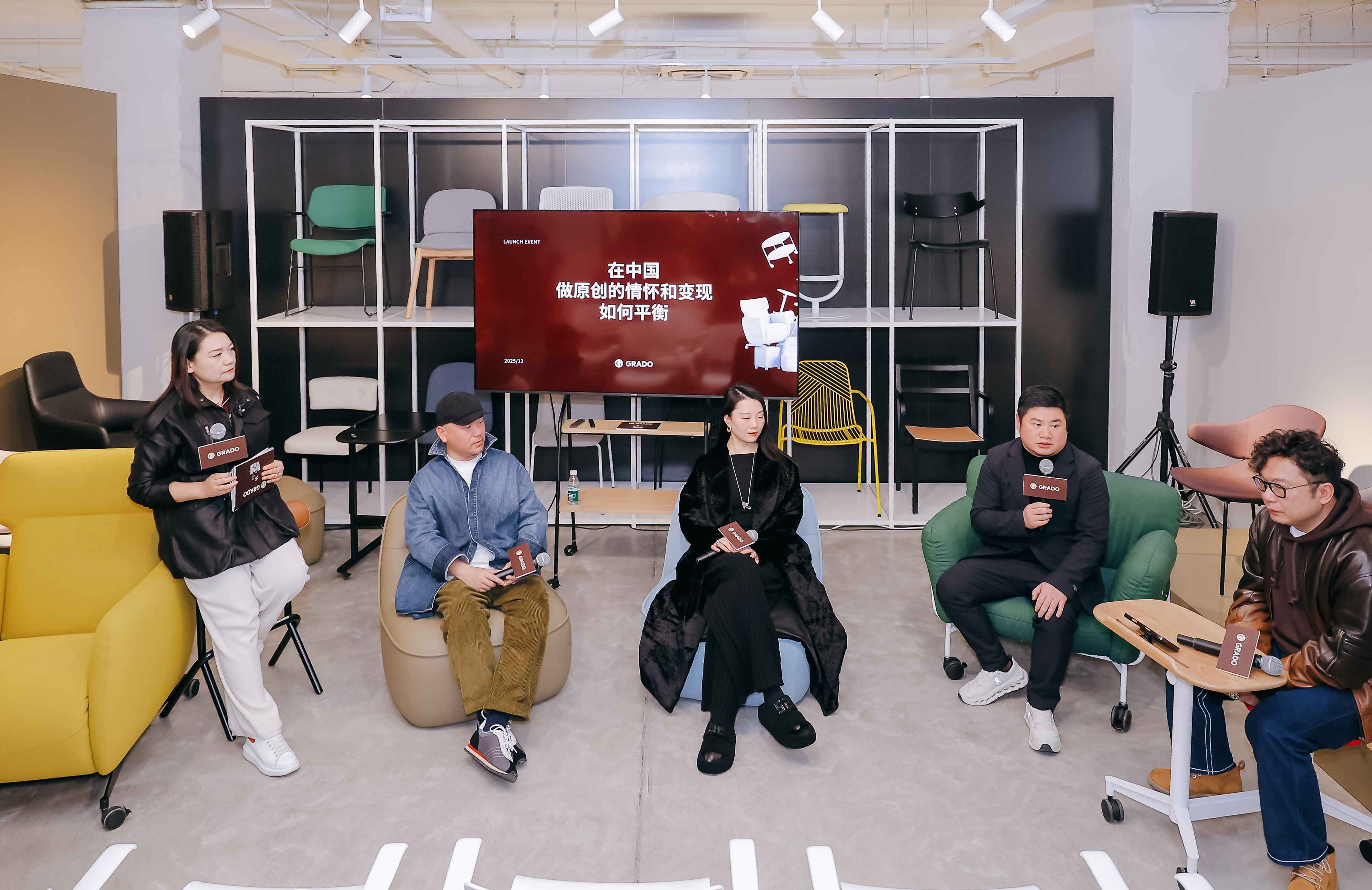
A panel discussion was hosted around the real-world application of the DOS system in workplace design, featuring Alex Chai, Founder of GRADO; Bob Chen (Chen Feibo), Founder of Bob Chen Design Office and Touch Feeling; Weng Wei, Founder of WEI DESIGN Studio; and Lin Sen, Executive President of Jiangnan Design Society and Founder of Gazer Design Studio.
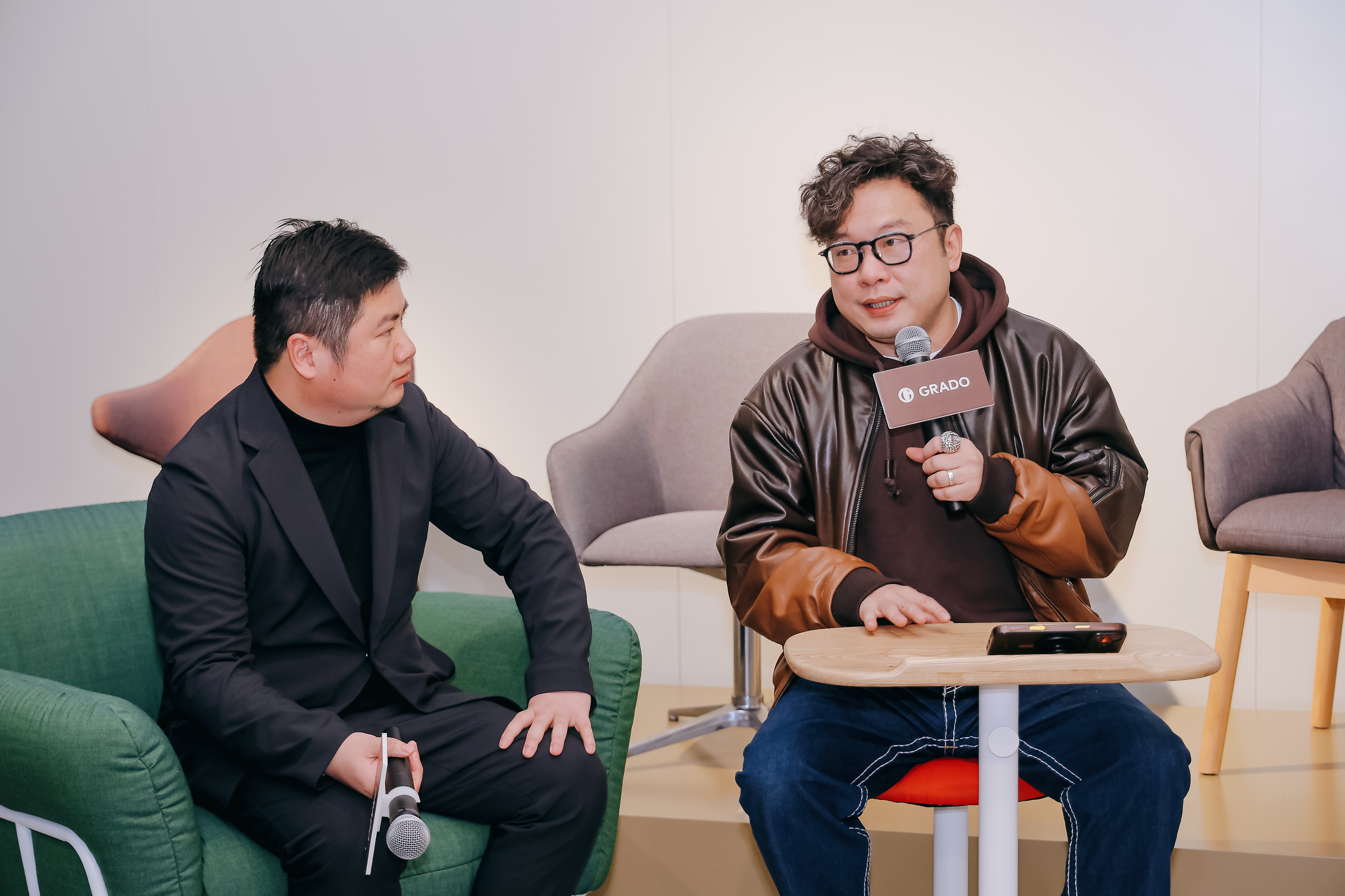
Their entry point was surprisingly simple: posture. Sitting back, leaning in, turning toward someone — each posture reflects a different social distance and communication mode. Furniture quietly organizes these relationships. From this lens, DOS is not only about furniture movement —it’s about adapting to shifting social dynamics at work. As hybrid collaboration increases, workplaces need systems that can launch quickly, reconfigure easily, and match the rhythm of interaction — rather than freezing it.
#03
On Originality and Enduring Value
The discussion then widened to brand development and originality. Over the years, GRADO has evolved from designing individual pieces to building complete spatial systems and methodologies. Originality, as the speakers shared, isn’t limited to invention from zero. It also lives in micro-innovation, system thinking, and improving real-world use.
And true originality requires time —not just to win attention, but to prove long-term relevance and durability. Emotion and commerce don’t have to conflict. When backed by solid manufacturing and brand systems, they reinforce one another.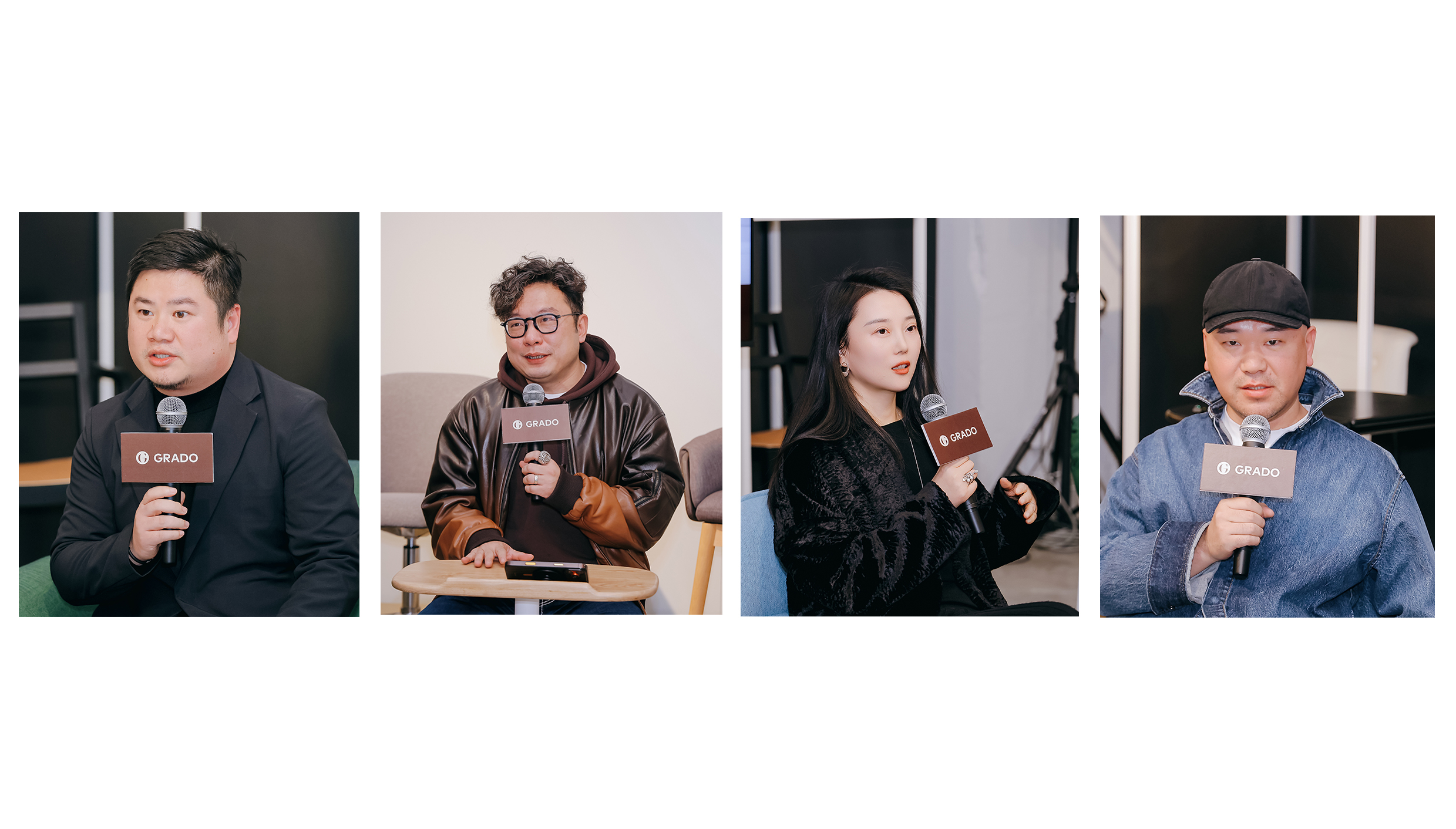
#04
Certain keywords
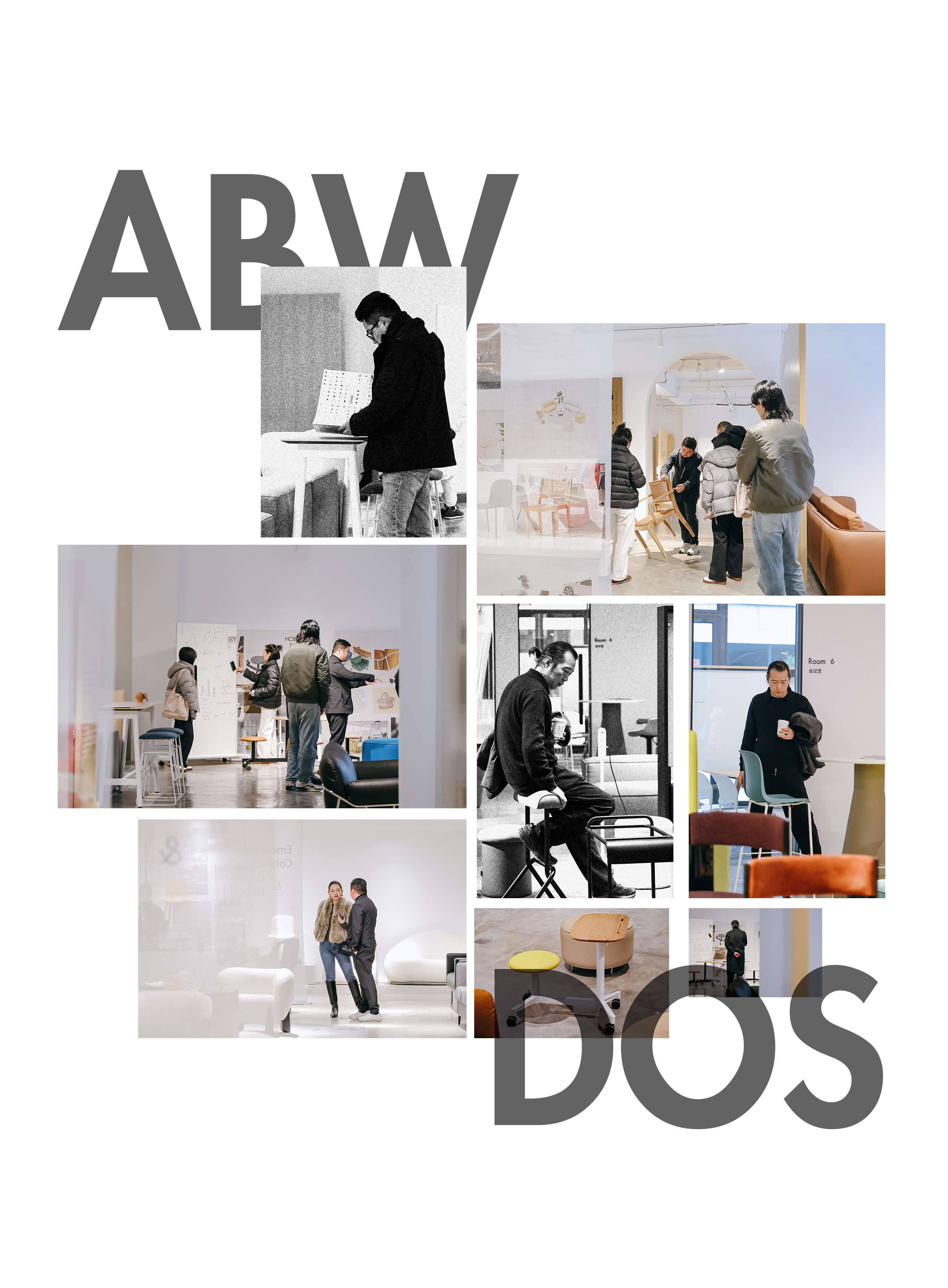
In the experience zone, guests tested the new products hands-on. Concepts turned into something tangible. Certain themes kept resurfacing: flexibility — change — cost — reuse. As uncertainty becomes the norm, the ability for space to adapt is no longer optional — it is strategic.
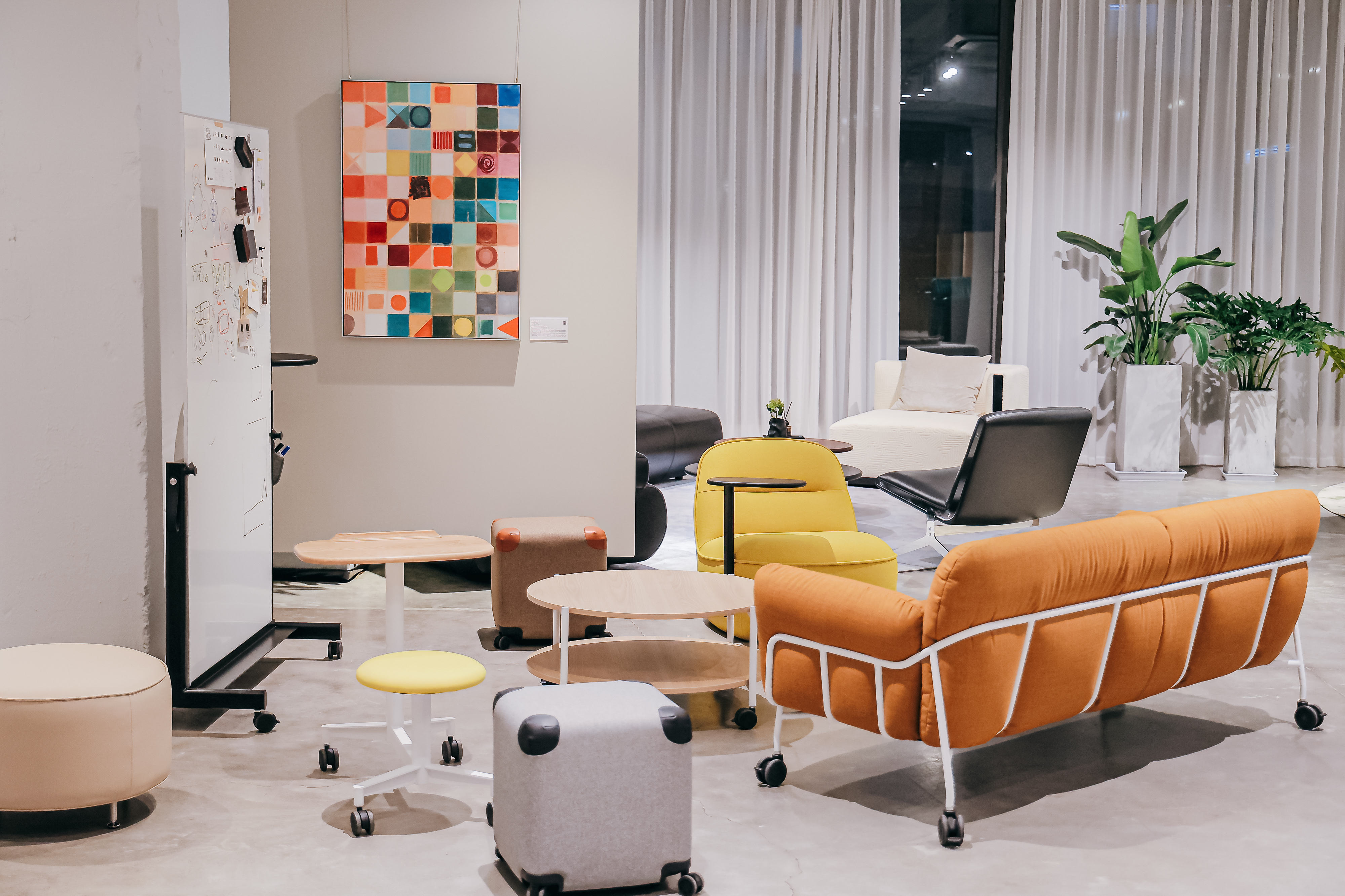
With hybrid work rising, multi-purpose “gray zones” are replacing rigid, single-use rooms. Spaces that transform effortlessly are becoming the most valuable areas in the office. DOS, therefore, is not a theoretical framework. It is a direct response to real behavior already happening.
#05
Back to the initial question
So we return to where we began: Does today’s office truly support how people work? ABW–DOS is not just a design language — it is a system for continuous adaptability. Instead of being locked by a one-time plan, the workplace becomes something that grows with its users, day by day.
We extend our thanks to all partners, designers and guests who joined the event. This launch marks a new chapter for GRADO — and we will continue sharing our research on future-ready workplaces. Work keeps changing. And so should space.
Designers Introduction